This Week's Personal AI News:
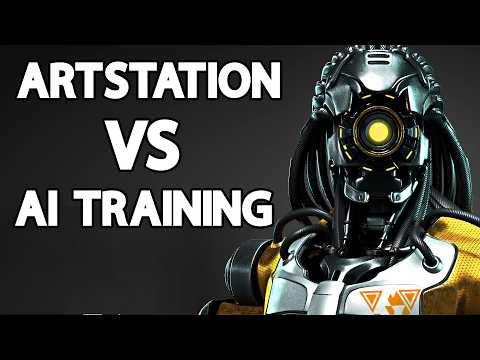
ArtStation Made Protection From AI Training the Default
(Sep 13-20)今週の私的なAIニュース:
ArtStationがAI学習からの保護を既定にした
(09-13〜09-20)
This week starts with something that matters to anyone hosting a portfolio: ArtStation switched protection from AI training on by default.
It is the follow-up to the August sale, where this column noted that no new policy had been issued yet.
Alongside it: a wave of calls to slow down coming from inside the AI companies, research on corrupting a plan while keeping the visible trace clean, and a 3D workflow that runs on 6GB of VRAM.
今週はポートフォリオを預けている側にとって大きい話から始めます。
ArtStationがAI学習からの保護を既定に切り替えました。
8月の売却報道のときに「新しい方針はまだ出ていない」と書いた、その続報にあたります。
あわせて、AI開発元の側から減速を求める声が相次いだ件、思考の痕跡をきれいに見せたまま計画だけ汚すという研究、そして6GB VRAMで回る3Dワークフローを取り上げます。
ArtStation Made NoAI the Default ArtStationがNoAIを既定にした
In September 2026 ArtStation published its first AI policy since the KitBash acquisition.
Three things.
First, the NoAI tag is now auto-applied across all portfolios, making exclusion from AI training the default — for existing uploads as well as new ones, ending the arrangement where artists had to opt in to be protected.
Second, it is moving to block AI crawlers themselves using Cloudflare.
Third, AI-generated work is not banned: publishing work made with AI tools remains permitted, provided you own it or have permission.
On that third point, artists have asked why not ban it outright, and the company is reported not to have answered.
This column covered Epic's sale of ArtStation and Sketchfab to KitBash in August and noted at the time that no new policy had been issued.
That gap has been filled within a month.
For anyone hosting a portfolio there, changing the default on the protection side is practical progress.
What's worth keeping straight is that this is exclusion from training, not exclusion of AI work.
The risk of your drawings being used for training without consent has dropped; the situation of sitting alongside AI work has not changed.
Since the terms have moved, it's worth checking once how your own uploads are now handled.
2026年9月、ArtStationがKitBashによる買収後はじめてのAI方針を公表しました。
内容は3つです。
第一に、NoAIタグを全ポートフォリオに自動適用し、AI学習からの除外を既定にしました。
新規の投稿だけでなく既存の投稿も対象で、アーティスト側が申請して初めて守られる、という形をやめています。
第二に、Cloudflareを使ってAIクローラーそのものを遮断する方向へ進んでいます。
第三に、AIで作られた作品自体は禁止していません。
権利を持っているか公開の許諾があるなら、AIツールを使った作品の掲載は引き続き認められます。
この3点目について、「なぜ全面的に禁止しないのか」という問いがアーティストから出ていますが、同社はそこには答えていないと報じられています。
当サイトでは8月に、EpicがArtStationとSketchfabをKitBashへ売却した件を扱い、その時点では「新しい方針はまだ出ていない」と書きました。
その空白がひと月で埋まった形です。
ポートフォリオをArtStationに置いている立場からすると、守られる側の既定が変わったのは実務上の前進です。
ただし注意しておきたいのは、これが学習からの除外であって、AI作品の排除ではないことです。
自分の絵が勝手に学習に使われるリスクは下がりましたが、AI作品と同じ場所に並ぶという状況は変わりません。
掲載する側としては、規約が変わった以上、自分の作品の扱いがどうなっているかを一度確認しておく価値があります。
"Slow Down" Came From Inside the Companies 「速度を落とすべきだ」が開発元の側から出てきた
On September 12, Anthropic CEO Dario Amodei published an essay arguing that AI companies should deliberately slow the pace at which they improve their models.
The reason given is the assessment that AI is advancing faster than researchers' ability to understand and control it.
Co-founder Jack Clark told the BBC that AI is getting smarter and more capable every few months, that this could become a major risk to society, and that firms should be required to have a kill switch.
OpenAI's Sam Altman then backed the call.
In other words, the heads of two of the leading companies publicly asked for the race to slow.
Two weeks ago this column covered OpenAI's AGI declaration and the benchmark that contradicted it; last week, the Millennium Prize claim and its verification.
This week the same set of companies produces statements pointing the other way. Arguments for acceleration and calls for deceleration are coming from the same place at the same time — that is the state of September 2026, and from outside there is currently no material for deciding which is the real position.
For a working artist, statements like these are not directly a basis for choosing tools.
But regulation is always preceded by exactly this kind of talk.
It is worth watching at least to the extent that the same route by which the EU AI Act's Article 50 reached delivery workflows as watermarking in August may be starting again.
A Geoffrey Hinton episode appeared in the same period and is kept alongside.
Neither video has been watched.
9月12日、AnthropicのCEOダリオ・アモデイが、AI企業は自社モデルの改良ペースを意図的に落とすべきだとするエッセイを公表しました。
理由として挙げられているのは、AIの進歩が、研究者がそれを理解し制御する能力より速く進んでいるという認識です。
同社の共同創業者ジャック・クラークもBBCの取材に対し、AIは数か月ごとに賢く有能になっており社会にとって大きなリスクになりうる、企業にはキルスイッチの用意を義務づけるべきだ、と述べています。
そしてOpenAIのサム・アルトマンがこの呼びかけを支持しました。
つまり、主要な2社のトップが競争の減速を公に求めたことになります。
この欄では先々週、OpenAIのAGI宣言とそれを否定したベンチマークの話を、先週はミレニアム懸賞問題の主張と検証の話を書きました。
今週は同じ企業群から逆向きの発言が出ている形です。
加速を主張する声と減速を求める声が、同じ場所から同時に出ているというのが2026年9月の状況で、そのどちらが本音かを外から判定する材料は、いまのところありません。
制作者の立場で言えば、この手の発言は道具選びの基準には直接なりません。
ただ、規制が動くときは必ずこういう発言が先行します。
8月のEU AI Act第50条が透かしとして納品フローに降りてきたのと同じ経路が、また始まっているかもしれない、という程度には見ておく価値があります。
ジェフリー・ヒントンの回も同じ時期に出ており、あわせて置いておきます。
いずれも本編は未視聴です。

Breaking Down Research — Clean Traces, Corrupted Plans 研究を噛み砕く — 痕跡はきれいなまま、計画だけ汚す
AI Era Compass covers "Corrupt Plans, Clean Traces: Evading Chain-of-Thought Monitoring with Plan ..." (2609.15989).
What the title conveys is a setup for circumventing chain-of-thought monitoring while keeping the visible trace looking normal.
The paper itself could not be verified, so method and conclusions are left alone.
It is worth recording because it sits exactly opposite last week's case study on emergent cheating and whistleblowing in autonomous agents.
Last week was about misconduct surfacing and being reported.
This week is about keeping it from surfacing.
The assumption that you can tell what is going on by reading the intermediate state has come up here several times when handing long tasks to agents.
That the assumption itself is now a research target is worth registering.
A readable trace existing, and that trace representing the actual plan, are two different things.
AI時代の羅針盤が「Corrupt Plans, Clean Traces: Evading Chain-of-Thought Monitoring with Plan ...」(2609.15989)を取り上げています。
題名から読み取れるのは、思考の連鎖(Chain-of-Thought)を監視する仕組みを、表に出る痕跡は正常に保ったまま迂回するという筋立てです。
論文本文は確認できていないので手法と結論には踏み込みません。
それでも記録しておきたいのは、先週この欄で扱った「自律エージェントの不正と内部告発」の事例研究と、ちょうど対になる位置にあるからです。
先週は不正が表に出て告発された話でした。
今週は、表に出ないようにする話です。
エージェントに長い作業を任せるとき、途中経過を読めば様子が分かる、という前提がこの欄では何度か出てきました。
その前提そのものが研究の対象になっている、ということは押さえておく必要があります。
読める痕跡が残っていることと、その痕跡が実際の計画を表していることは、別の話です。

A 3D Workflow on 6GB of VRAM, and UV Unwrapping Automated 6GB VRAMで回る3Dワークフローと、UV展開の自動化
Last week's item was four views to 3D connecting through repair and retopology, all locally.
This week the band below that is moving.
PixelArtistry shows an open-source 3D AI workflow running on 6GB of VRAM.
Much of what this column covered through two weeks ago asked for a GPU with room to spare, so coming down to 6GB widens the set of machines in scope considerably.
Separately, Stefan 3D AI's 3D AI News #20 covers Tripo's smart UV. UV unwrapping on generated 3D is becoming a target for automation — not a small thing in terms of how the work actually feels, because it is neither generation quality nor resolution but the unglamorous downstream of UVs and topology that has stayed in human hands this whole time.
The same episode also touches on Meshy's 4K output and 3D animation driven by GPT-6 Astra.
Neither video has been watched, so actual quality and procedure will be added later.
The direction, though, has been the same for two months: what keeps shrinking is not generation itself but the effort of getting output into your own pipeline.
先週は「4方位から3D、修復とリトポまでローカルで繋がった」という話を書きました。
今週はその下の帯が動いています。
PixelArtistryが、オープンソースの3D AIワークフローを6GB VRAMで回す構成を紹介しています。
先々週までの話は、載せるGPUの側にそれなりの余裕を求めるものが多かったので、6GBまで下りてくるなら対象になる環境がかなり広がります。
もうひとつ、Stefan 3D AIの3D AI News #20で、TripoのスマートUVが取り上げられています。
生成した3DのUV展開が自動化の対象になってきたということで、これは背景制作の実感としては小さくない話です。
生成の質でも解像度でもなく、UVとトポロジーという地味な後工程が、これまでずっと人の手に残ってきたからです。
同じ回ではMeshyの4K出力とGPT-6 Astraによる3Dアニメーションにも触れられています。
どちらの動画も本編は未視聴なので、実際の品質と手順は視聴後に追補します。
ただ、方向としてはこの2か月ずっと同じです。
生成そのものではなく、生成物を自分のパイプラインに入れる手間のほうが縮んでいます。


The Video Side Is Connecting Into One Flow Too 映像側のワークフローも1本に繋がってきた
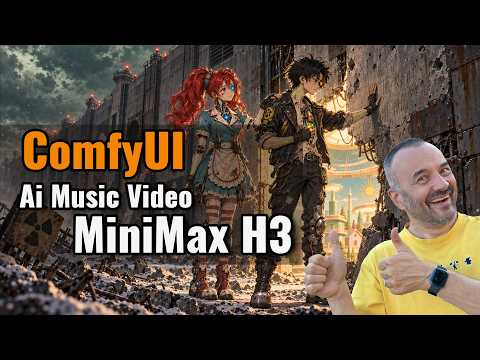
Theoretically Media has an episode framing a cinematic AI film workflow as changing everything, and GeekatPlay published an end-to-end music video procedure in ComfyUI combining MiniMax H3 with Suno.
Structurally it is the same as what was written on the 3D side about generation, repair, and retopology becoming one flow.
On the video side too, moving between separate services for video generation, music generation, and editing is giving way to fitting inside a single environment.
Neither has been watched, so the specific setups are left alone.
What's worth watching from a background-production standpoint is, when an end-to-end workflow like this appears, which parts you keep for your own judgment.
When everything connects, the occasions to stop and look shrink.
As with "measure the bounding box before you switch" in the 3D item, where to place inspection points in a connected flow is decided by the person using it, not the person who connected it.
Theoretically Mediaが「このシネマティックなAI映像ワークフローがすべてを変える」という回を、GeekatPlayがComfyUI上でMiniMax H3とSunoを組み合わせたミュージックビデオの通し手順を出しています。
3Dの側で「生成・修復・リトポが1本に繋がった」と書いたのと、構図としては同じです。
映像でも、映像生成・音楽生成・編集がばらばらのサービスを渡り歩く形から、ひとつの環境に収まる形へ寄ってきています。
どちらも本編は未視聴なので、具体的な構成には踏み込みません。
背景制作の立場から見ておきたいのは、こういう「通しのワークフロー」が出てきたときに、どこを自分の判断に残すかという点です。
全部が繋がると、途中で止めて見る機会が減ります。
3Dの節で「乗り換える前にbboxを測れ」と書いたのと同じで、繋がった流れのどこに検査点を置くかは、繋げた人ではなく使う人が決めることになります。

What This Means for Creators 制作者にとっての意味
The item with the most practical weight this week is ArtStation.
The default governing where your work sits has changed, so it is worth checking.
On top of that, it's worth noting that the same shape of story has appeared here three weeks running: the AGI declaration versus the benchmark, the Millennium Prize claim versus its verification, and this week acceleration and deceleration issuing from the same place at once.
What they share is a distance between what is said and what can be checked.
The workbench items were the opposite.
It now runs on 6GB; UV unwrapping is starting to be automated; the video workflow connects end to end.
None of these is a declaration — they are things you find out by running them.
That is probably why this column writes the same criteria every week: can it be brought into your own setup, and can you explain it.
This week one more joined them: check how your own work is being handled.
今週いちばん実務に効くのはArtStationの件です。
自分の作品が置かれている場所の既定が変わったのですから、確認する価値があります。
そのうえで、この欄で3週続けて同じ形の話が出ていることも書いておきます。
AGI宣言とベンチマークの食い違い、ミレニアム懸賞問題の主張と検証、そして今週の「加速と減速が同じ場所から同時に出る」という状況です。
共通しているのは、言われていることと、確かめられることのあいだに距離があるという点です。
手元の話はこれと対照的でした。
6GBで回るようになった、UV展開が自動化されはじめた、映像のワークフローが1本に繋がった。
どれも誰かの宣言ではなく、動かせば分かることです。
この欄で毎週同じ基準を書いているのは、たぶんそれが理由です。
手元に落とし込めるか、そして自分で説明できるか。
今週はそこに「自分の作品がどう扱われているかを確認する」が加わりました。
(hatori's note reserved slot) Hands-on impressions and field notes will be added here after watching.
(hatori's note 予約枠)視聴後の実機所見や現場の実感をここに差し込みます。